Showing posts with label Sacraments. Show all posts

Saturday, June 14, 2014

Marriage is the Sacrament of Trinitarian Life.

I find it so fitting that John and Mary has chosen this day to get married; the weekend where the Catholic Church celebrates the solemnity of the Most Holy Trinity. It is my desire and hope and I strongly believe that as you listen and reflect on the homily you would understand why I had said that it is fitting that this couple has chosen this day to make their commitment to each other.  Pope Saint John Paul II in his 1994 Letter to Families suggested to the various families in the world to take the Trinity as a model of Family. I quote; “In the light of the New Testament it is possible to discern how the primordial model of the family is to be sought in God himself, in the Trinitarian mystery of His life. The divine ‘We’ is the eternal pattern of the human ‘we’, especially of that ‘we’ formed by the man and the woman created in the divine image and likeness.” Now in a simple way for you John and Mary, what St. John Paul II is saying is that in their marital relationship, a man and a woman can together image the Most Holy Trinity, definitely in a limited human way. So basically your marriage life should draw you into the life of a Triune God.  Taking the Trinitarian life as your model in marriage, your marriage life not only follow this perfect example of unity and community but to participate actively in this Trinitarian life it would also mean that you two would have to use your individual and couple gifts as followers of the Trinity in the work of Salvation.   
 
The Trinity is founded in love. It is so appropriate to listen to the reading taken from 1John 4:7-12 that you two have chose for your wedding. The statement ‘God is Love’ is Trinitarian; only because God is love can God self-communicate to us as love (Kasper). Our life is meaningful only when our love mirrors the love of the Trinity.  The theologian Richard of St. Victor explains that ‘When one person gives love to another and he alone loves only the other, there certainly is love, but it is not shared love. When two love each other mutually and give to each other the affection of supreme longing; there is certainly is love on both sides, but it is not shared love either. Shared love is properly said to exist when a third person is loved by two persons harmoniously and in community, and the affection of the two persons is fused into one affection by the flame of love for the third.’ From here, we can see now that the Trinity becomes a model of love too. St. Augustine once explained that the Holy Spirit is the love of the Father and the Son. The Holy Spirit then, as the spirit of love of the Father and of the Son, transforms the love of man and woman into part of the Trinitarian love which is the very being of God. ‘Just as in the Trinity where the Father and Son bring forth the Spirit by their love, so too marital love is open to another who proceeds from the mutual love of the husband and wife’ (Gallagher) and here we are definitely talking about the procreation of children, in a way we see that it parallels the creative and nurturing dimensions of the Trinity. Of course this particular and special fruitfulness of marriage has been the dominant aspect emphasized by the church but this fruitfulness is not limited to generativity.  The creative result of a marriage though has been highlighted by the church as generativity can also be a shared purpose of a life project between the two of you. I hope the two of you had discussed about your ambitions, visions, dreams and plans as a family. 


 ‘The relationship among the Persons of the Trinity is marked by equality of personhood, interdependence (not independence), cooperation (not competition), unity of purpose, and mutual self-giving and receiving’ (Martin Davis). Moreover, the relationship among the divine Persons in the Trinity is so close and intimate that they are said to ‘mutually indwell’ one another (perichoresis). At this junction here I find it very appropriate to quote the United States Bishops’ Conference in their pastoral letter entitled ‘Marriage – Love and Life in the Divine Plan’ “First, like the Persons of the Trinity, marriage is a communion of love between co-equal persons, beginning with that between husband and wife and then extending to all members of the family…. This communion of life-giving love is witnessed within the life of the family, where parents and children, brothers and sisters, grandparents and relatives are called to live in loving harmony with one another and to provide mutual support to one another…. These relations among the persons in communion simultaneously distinguish them from one another and unite them to one another…. Therefore, just as the Father, the Son, and the Holy Spirit are distinctly who they are only in relation to one another, so a man and a woman are distinctly who they are as husband and wife only in relation to one another. At the same time, in a way analogous to the relations among Father, Son, and Holy Spirit, which unites the three persons as one God, the inter-relationship of the husband and wife make them one as a married couple…. The Trinitarian image in marriage and family life can be seen in a second way. Just as the Trinity of persons is a life-giving communion of live both in relationship to one another and to the whole of creation, so a married couple shares in this life-giving communion of love by together procreating children in the conjugal act of love…”

Dear John and Mary, immediately after making your vows, you both no longer would participate as individuals but as a couple. The other married couples gathered here to witness your marriage can testify to this that in a marriage there is constantly mutual giving and receiving. In all that you do, in your decisions, you have to consider the other. Love consists of self-giving and receiving, a lot of sacrifices. Here meaning that each of you would be putting the needs of the other before one’s own. “In marriage, man and woman can complement each other in a mutual way by making decisions together and sharing roles. This shared life pattern is an expression of the couples’ love and mutuality; it shines from and contributes to their ongoing marital relationship’ (Denis Toohey). In this living out of mutual giving and receiving the married couple most closely resembles the Trinity. Just as their relationality gives meaning to the three divine persons, it is the process of becoming one flesh that gives meaning and purpose to a marriage as we have heard in the short Gospel text taken from Matthew 19: 4b-6 chosen for the wedding today. The persons in the relationship are equal, there is no hierarchy. “In any form of true community and especially so of the Trinity and of marital relationship, the focus is on the other, not oneself; persons relate as equals in personhood, regardless of talents or rights” (LaCugna). I am sure that all of us gathered here, can see the expressions of love that both of you have for each other. The love that you express especially when you make your marital vows, forms a unity; a communion of love. In the Trinity, there is love so perfect that the result is perfect unity, one God, and this perfect communion of love is what that you two must always remember and continue to aspire. In sacramental terms, the presence of the Trinity, already bestowed on you through the grace at baptism, is now effected in the Christian marriage in a new manner, as a joint communion of both of you and your participation in the Trinitarian love. 


The Vatican II document, Gaudium et Spes, n.48, marriage is described as ‘an intimate partnership of life and love’. Within the unity, there is profound intimacy and as I mentioned earlier, this intimacy is described as ‘mutually indwell’ in the Trinity. The intimacy within marriage refers to much more than only conjugal union and is achieved through the self giving in love. “Intimacy in marriage involves an overlapping of space, a willingness to be influenced and openness to the possibility of change’ (Whitehead). John and Mary, I have been using the model of the Trinity to show you that marital relationships are to be like the Trinitarian relationship. While the Trinitarian relationships are eternal, the marital relationship is forever. This is the commitment that the two of you are about to make. “Your irrevocable commitments in mutual surrender reflect the unbreakable fidelity of God within the Trinity and to those whom God loves outside it” (Hogan and Le Voir).    


I hope that this homily not only finds a place in the married life of John and Mary but also to all those gathered here to witness this bond between them, let it be to those already married and those who are thinking of getting married. By modeling and patterning your marriages on this perfect example of unity and community, I hope your marriages fulfill the vocation in bringing about the reign of the Trinitarian God, not only in your married life and family but also through your witness to the love of God in the world. We pray that John and Mary and all married couples do not only image and model the Trinity but also participates in the Trinitarian life and work of salvation reaching out to all people who come in their way.   

Friday, September 30, 2011

A better understanding on the Sacrament of the Anointing of the Sick.

There have been some 'talk' on the Sacrament of the Sick lately at the small town I'm currently staying. Gathering from the discussions I hear, many people have actually misinterpreted and misunderstood this beautiful sacrament of spiritual and physical healing.

In the early middle ages this sacrament was administered to people who were not likely to recover from their sickness and eventually this became known as the sacrament for the dying which were likely called; last anointing or extreme unction (extrema unctio). Many people in this modern times still keep the above idea of extreme unction. I have seen this a couple of times when I follow priests when they go to administer the sacrament of anointing and the sick person or even the family members will decline to be anointed. Catholics still dreaded to ask for a priest to anoint themselves or their loved ones, since it was a sign that they had given up all hope of recovery and in the imminent danger of death.

So my dear friends if you are in the above group of people, this posts if especially for you. Now let us see one of the many text from scripture that explains this Sacrament of Anointing.
James 5:14-15 - "Are any among you sick? They should call for the presbyters of the church and have them pray over them, anointing them with oil in the name of the Lord. The prayer of faith will save the sick, and the Lord will raise them up; and anyone who has committed any sins will be forgiven". The words that to be noted from the text is: Save, Raise them up, Forgiven. Now this three words clearly shows that it was not meant only for the dying but also 'spells out' HOPE for the sick.

Now how do we define who receives this sacrament for the 'sick'? I'm having a headache or a flu, so am I eligible to receive this sacrament? Definitely a sound mind and common sense can give an answer but nevertheless lets see what the Catechism of the Catholic Church has to say on this; 'The Apostolic Constitution Sacram unctionem infirmorum, following upon the Second Vatican Council, established that henceforth, in the Roman Rite, the following be observed: The sacrament of Anointing of the Sick is given to those who are seriously ill...'(CCC.1513).

'The Anointing of the Sick is not a sacrament for those only who are at the point of death. Hence, as soon as anyone of the faithful begins to be in danger of death from sickness or old age, the fitting time for him to receive this sacrament has certainly already arrived.' (CCC.1514).


'If a sick person who received this anointing recovers his health, he can in the case of another grave illness receive this sacrament again. If during the same illness the person's condition becomes more serious, the sacrament may be repeated. It is fitting to receive the Anointing of the Sick just prior to a serious operation. The same holds for the elderly whose frailty becomes more pronounced. (CCC.1515).

So who can administer this Sacrament of the Anointing of the Sick? It is ONLY the priests. Now in addition to the Anointing, the Church offers those who are about to leave this life the Eucharist as viaticum. Communion in the body and blood of Christ, received at this moment of 'passing over' to the Father. Now a deacon can administer the viaticum; a latin word which means 'provisions or food for the journey' and any commissioned Extra-Ordinary Ministers can distribute communion to the sick.

Please read the CCC.1499-1532 for more better understanding.

Wednesday, July 07, 2010

SFX Church, Malacca Confirmation Camp - 2010.


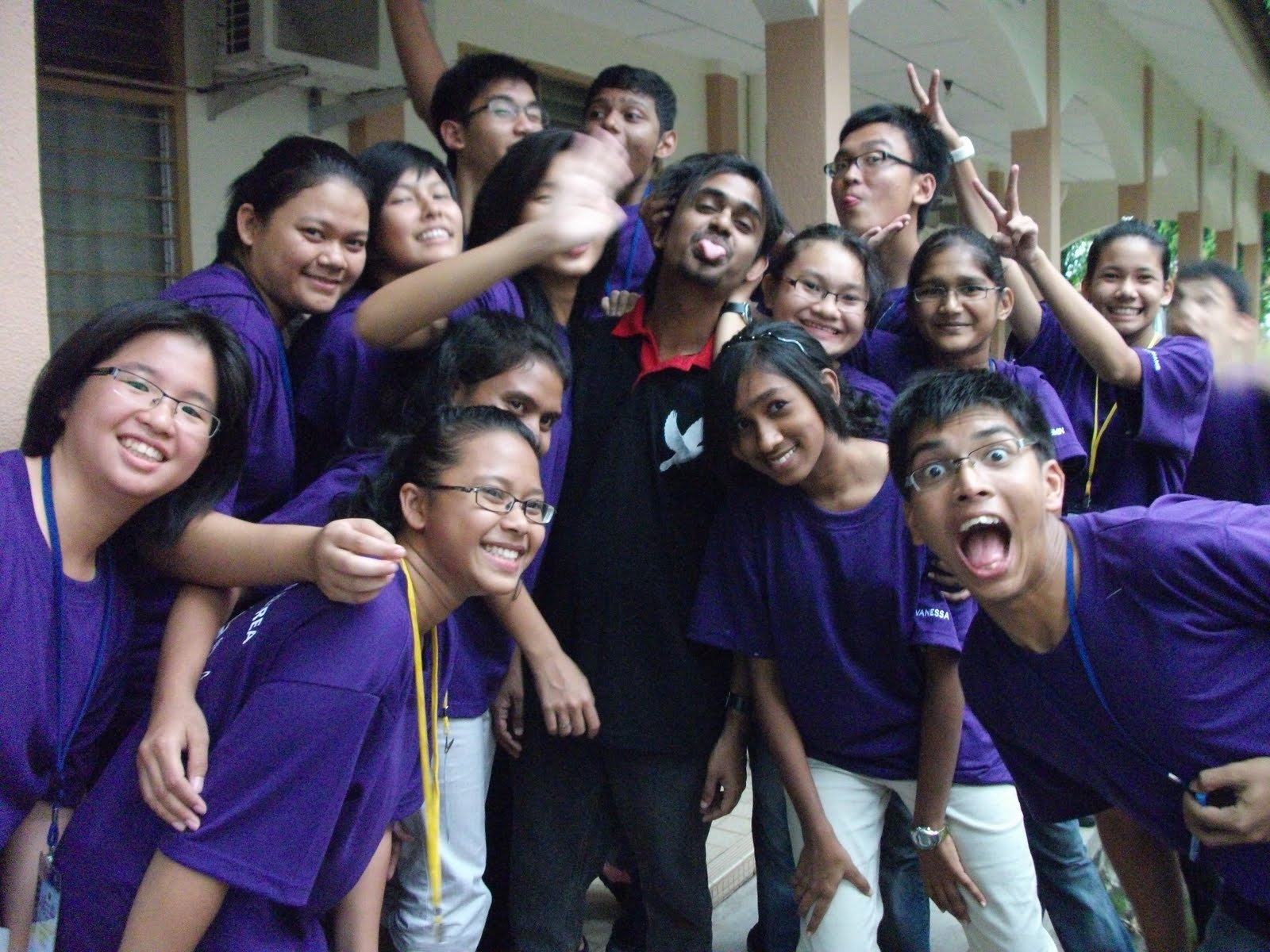
I have conducted many confirmation camps but this group from the Church of St. Francis Xavier, Malacca has been my best group so far. What I like in them the most is that, they asked good, quality, theological questions. Yes, I like when students actively participate and asks questions.
This camp with the theme given by the catechist; 'Confirmation and My Mission' was held at the Good Shepherd Seminary, Malacca on July 04-06, 2010. Thanks to the teachers who prepared them the past few years, these confirmation students were all energized and eager to receive the sacrament of confirmation. They were all cool, happening and sporting bunch of young people who are so excited in wanting to know more about the Lord and share in His mission.


Looking at their spirit and enthusiasm, I am convinced that the students left the camp with a new theme i.e 'MY Confirmation and MY Mission'.
May God continue to bless, guard and guide them always....Amen.

Tuesday, October 21, 2008

The Celebration of the Sacrament of Anointing of the Sick with Mass.

Inconjuction of the 150th Anniversary of the Lourdes apparition and the Feast of St. Luke a special Mass for the sick with the Sacrament of Anointing of the Sick was held at Berry, NSW on October 21, 2008. Mass presided by Rev. Fr. Patrick Faherty (Parish Priest & Vicar General) and Con-celebrated by Rev. Fr. Ronan Kilgannon (Asst. Priest / Hermit - Kangaroo Valley).

Laying on of hands (James 5:14)


"...The grace of the Sacrament of Anointing of the Sick consists in welcoming Christ the healer into ourselves. However, Christ is not a healer in the manner of the world. In order to heal us, he does not remain outside the suffering that is experienced; he eases it by coming to dwell within the one stricken by illness, to bear it and live it with him. Christ's presence comes to break the isolation which pain induces. Man no longer bears his burden alone; as a suffering member of Christ, he is conformed to Christ in his self-offering to the Father, and he participates, in him, in the coming to birth of the new creation..." (from the Homily of Pope Benedict XVI at Lourdes on September 15, 2008.

Fr. Patrick praying over the oil


The Anointing (James 5:14)

+ Through this Holy Anointing,
may the Lord in His love and mercy
help you with the grace of the Holy Spirit..Amen.

+ May the Lord who frees you from sin,
save you and raise you up..Amen.


The Holy Eucharist
(James 5:15)


Tuesday, October 07, 2008

Reflection on a statue of BVM at Bomaderry Parish.

My reflection on the statue of Our Lady and the Child Jesus at the Church of the Sacred Heart, Bomaderry, NSW. Australia.

I do not know what was on the mind of the sculptor of this statue but it did catch my attention when i visited this parish a week ago. There are many types of statues of our Lady with different titles or names given, sadly I do not know what this statue is called. At the end of my reflection, I would give this statue a name.
Here is my reflection:-

Mary has a gentle, motherly face with a proud expression just like any other mother who is proud of her child and wants to show him off (Lk.2:33). She is carrying the child Jesus firmly; protecting and preventing him from falling. In a way to tell us that the son is precious and she will protect us and look after us just like how she looked after her son (Lk.2:48 / Jn.19:26).

This statue shows us the humble handmaid of the Lord (
Lk.1:38); Mary's dressing is simple unlike the many other statues where there are embroidery with jewels and shinning precious stones on her garment (Ps.45:13-14). Example of such statues are Our Lady of Fatima, Our lady of Velankanni, Our Lady of La Vang.

Her humility is also shown on her face. Here Mary is looking downwards, and if you stand directly below the statue, you see her looking at you, as though telling us to
"do whatever He tells you" (Jn.2:5). This statue shows Mary barefooted.

Her right hand seems to indicate;
"it's not me!", maybe in a way telling us to pay attention on Jesus. Her finger is pointing upwards, can she be telling us of her Magnificat? (Lk.1:46-55) (Mary's praises to God). It can also be that she is teaching or giving us some instructions.

The way Mary is carrying Jesus is to show Him to us. He is in the attention and not Mary. Jesus is in front (center stage) and Mary seems to be at the back. This is how Mary has always been, always 'backing' her son in His ministry. And today she is 'backing' us through her intercession for each one of us.


Let us look at Jesus now. Just like His mother, He too is wearing something simple and is barefooted. This shows the humanity of Jesus, Son of God and Son of Mary and His humility (Phil 2:5-11).

The Child Jesus is sitting comfortably on the arms of His mother and is close to her heart. For Jesus it can be the meaning of the Gospel text of
Lk.2:51 - "Jesus then went down to Nazareth with His parents and was obedient to them". As for Mary it can be the few text that tells us that Mary treasured and pondered everything in her heart (Lk.2:19, 51, 8:21).

Jesus is in a toddler age but He has a mature, confident look. He has a look of a person with authority and this shows that He is in control (
Lk.1:31-33). His eyes is fixed on us (Mk.10:21) and His left hand is open, a sign of welcoming and giving of Himself. I am sure you have experienced when a baby or a toddler wants you to carry, or to go to you, he/she will open the arms so you can carry. Here Jesus is giving himself to each one of us and He wants us to accept Him (Jn.3:16-17, 10:10).

With His right hand, Jesus is carrying the
ciborium. Notice that He is not holding it firmly. He is giving the ciborium to us; "Take this all of you..." (1 Cor.11:23-26).

The ciborium is in the center and seems to be resting on the womb of Mary. This idea rightfully fits in with the typology of
Mary as the Ark of the Covenant which is one of the many traditional titles in the Litany of the Blessed Virgin Mary.

For me personally, I will name this statue as
Mary, Women of the Eucharist since the very center of this statue is Jesus giving us the ciborium.

Sanctuary of the Church of the Sacred Heart, Bomaderry, NSW.

Reflecting on this statue, bring to mind my World Youth Day pilgrimage to Rome in 2000. While making this pilgrimage I went to many Basilica, Cathedrals, Shrines and Churches dedicated to our Lord, Mary and the Saints. I was always amazed at those statues they have there. Never have I seen statues of Mary and the Saints being exalted or exaggerated that they became the focus and not Christ. The statues of Mary and the Saints in these places always show their humility and greatness of God. These statue in a sense Christocentric for they direct us to God and not on themselves. These statues are a reminder for us to imitate their lives of always worshipping God and doing His will.

The Catholic church has many times been accused of Mariolatry or Idolatry which is not true, for we only honor them, Mary and the Saints and worship only the One true Triune God - The Father, Son and Holy Spirit through whom all good things come.

Church of the Sacred Heart, Bomaderry, NSW, Australia.

Sunday, October 05, 2008

Introduction to Vespers (Psalter: Week 3, Sunday Evening Prayer II)

Psalm 110 (111) which we pray this evening, can be said as a 'good finale' for the celebration of Sunday. As we meditate it towards the end of the 'Day of the Lord', it helps us to contemplate the Paschal Mysteries of Jesus that we have celebrated in the Eucharist earlier today:- "Great are the works of the Lord, to be pondered by all who love Him". In fact, the 'Day of the Lord reminds us that our Lord does wonders! Christ's resurrection, which we have contemplated at Mass today, is only the beginning of universal resurrection which all of us desire so much. For the Eucharistic celebration is a foretaste of the heavenly banquet.

By keeping His covenant ever in mind, God "gives food to those who fear him." The Eucharist which we celebrated today in union with the whole church throughout the world has made God's covenant present with mankind.

This psalm is also a reminder of how our God has done marvels for us. Therefore as we pray, we remember that "
majestic and glorious are the works of the Lord, which is to be pondered by all who love him." Let us give thanks to the Lord with all our hearts, for "the Lord is compassion and love."

The quotations above are all from Psalm 110 (111).

Wednesday, October 24, 2007

Introduction to Vespers - Week 1, Wednesday.


(Introduction based on Psalm 26 (27).
Last year when I visited my uncle who was old and sick, I used to bring him Holy Communion. He will usually ask about my parents and how the other relatives back home in Seremban. He will always tell me that he wants to come and visit them. Then when his situation became worst and he couldn’t eat anything, just being fed with fluid through the tube, I did not bring him Holy Communion. He called me close to him and whispered to me. I thought he was going to ask the same questions whenever I visited him; how are my parents and those in Seremban.

But to my surprise he asked me for the Eucharist. I was speechless. My cousin heard what he was asking and she consoled him by telling him that once he gets better and the tubes are removed he can receive Holy Communion.

In his request to me, my uncle actually repeated the same sentiments found in psalm 26(27); “There is one thing I ask of the Lord, for this I long, to live in the house of the Lord, all the days of my life, to savour the sweetness of the Lord, to behold His temple".


All he wanted was to live with God and to savour the sweetness of the lord. He never received Holy Communion before he died but he did receive the Sacrament of the Anointing of the sick and I believe with his faith during his dying days he is now enjoying God’s presence and savouring the sweetness of the Lord.

Dear friends, how privileged are we, for everyday we have the opportunity to savour the sweetness of the Lord through the Eucharist and sit in his presence in the Blessed Sacrament. Let us pray that we will not take God’s gift and graces for granted but come to appreciate and long for it.
 

We also thank God for calling us and we pray too, that we will be worthy ministers of His sacraments.

Friday, August 17, 2007

Marriage and Celibacy - Matthew 19:3-12

Reflection on the gospel of the 19th Week in Ordinary Time, Year I: Friday.
Matthew 19:3-12


In today's gospel, we can find the theme of Marriage and Celibacy.

'Matthew's presentation of Jesus' teaching on marriage and divorce in verses 4-9 first cites Genesis 1:27 (v.4) and Genesis 2:24 (v.5) to the effect that in God's original plan of creation marriage was indissoluble and no human agent could end such a union (v.6).
In verse 19:11 Jesus clearly states that celibacy is a gift from God and is not for all.'
- source: Collegeville Bible Commentary.

I have always wanted to post the clips below on my blog since finding it at Youtube. I think today is the right time to post it because of the theme of Marriage and Celibacy we find in the Gospel today. The clips can be long but it is worth listening. Though this is a homily for an ordination but the Bishop do give good messages for married couples (see esp. clip 2).

Ordination Homily of a Catholic Priest - Part 1


Ordination Homily of a Catholic Priest - Part 2 (5 promises)


Ordination Homily of a Catholic Priest - Part 3 (Be a Eucharistic Priest)


Ordination Rite of Catholic Priest, Sacrament & Ritual

Sunday, June 10, 2007

Corpus Christi - 2007

I will be leaving for my silent retreat later at 6am together with my 3 classmates. Will be back on July22.

Please pray for us. Hope to update my blog with my experiences when i am back.


A reflection and prayer for the Solemnity of the Body and Blood of Jesus Christ.

Friday, March 16, 2007

Why Go To Confession?

Many churches will be having Reconciliation Services around this time. It is a good opportunity for us to be reconciled and strengthen our relationship with the Lord. I found an interesting article from a website and would like to share with all of you.

Why Go To Confession?

A person once asked about the need for the sacrament of confession when we can easily confess our sins directly to God. While there is some truth to this, there is something else that needs to be considered. Whenever we sin, our first response should be an immediate appeal to God for mercy and forgiveness. Repentance should be a regular part of the life of every human being, especially a believer. God is omniscient. Even when we repent in the secret of our heart, we are not telling Him anything that He doesn't already know. Rather, we are acknowledging our sin and taking responsibility for our actions and their consequences. The question that remains is whether or not t
his private, one to one conversation with God is enough. God does not need our repentance, we do. So God's gift of the forgiveness of sins is tailored to meet our needs.

One thing we should note is that human beings live in community and our actions affect others for good or for evil. So sin-even sin committed in private-is not a purely private matter. All of our actions have a communitarian dimension. That means our reconciliation after sin must somehow involve the community. The Sacrament of Penance provides that necessary link between the commission of sin by the individual and the reconciliation of the sinner with God and the community of believers, especially in cases involving serious or mortal sins, which require the influx of sacramental grace for forgiveness.
Did you ever notice that people usually don't question the communitarian dimensions of Baptism, Confirmation, Eucharist, Matrimony, Holy Orders, or even Anointing of the Sick? But they always seem to question the need for an instrument, a human mediator, in the Sacrament of Penance! Why? Because confessing one's sins to another human being is difficult. It is often embarrassing. But that is part of the power of sacramental reconciliation. It makes one honest and humble before God through a human instrument-little chance for self-deception here!

The question still remains about the necessity of going to confession. Well, what does the Bible say? In St. Mark's Gospel (2:5-12), the Pharisees criticize Jesus for forgiving a man's sins. To prove that He has this authority, Jesus cures the man. The Pharisees couldn't bear the thought of a man acting as if He were God! They didn't know that Jesus was also God. As God, Jesus is unlimited in power and in St. Matthew's Gospel He shares His power and authority with His Church through St. Peter, who was just a man!

Simon Peter answered, "You are the Christ, the Son of the living God." Jesus replied, "Blessed are you, Simon son of Jonah, for this was not revealed to you by man, but by my Father in heaven. And I tell you that you are Peter, and on this rock I will build my church, and the gates of Hades will not overcome it. I will give you the keys of the kingdom of heaven; whatever you bind on earth will be bound in heaven, and whatever you loose on earth will be loosed in heaven" (Mt. 16:16-19).

Finally in St. John's Gospel (20:21-23), Jesus explicitly gives the disciples the Holy Spirit and the authority to forgive sins:

Again Jesus said, "Peace be with you! As the Father has sent me, I am sending you." And with that he breathed on them and said, "Receive the Holy Spirit. If you forgive anyone his sins, they are forgiven; if you do not forgive them, they are not forgiven."

Jesus gave this power to His disciples and the Church continues to make it present to the People of God. Our response to this gift should first be one of gratitude. Then we should be motivated to examine our consciences, confess our sins, be reconciled to God and our brothers and sister and discover the joy of living in God's mercy.

Sunday, February 11, 2007

What's happening at the pews???

These past few Sundays I have been going for mass at the various parishes I was posted for my pastoral before. Since I was not on pastoral so I decided to attend mass dressed a ‘civilian’ (not with my clerical shirt or any identification that I am a seminarian). It was a good experience and I think all priest and church leaders especially youth leaders should do it to see what is happening among the parishioners especially the youths while mass is going on. They can also understand what the parishioners are going through while they sit at the altar.

The first parish I went, I had an encounter with a girl who was chatting with her boyfriend throughout the mass. I hinted by giving her signs that she was loud, she still kept on talking. Then I turn to her and said “Excuse me” but she could ask me back ‘What?” and louder she continued chatting. For your info, the readings were being read at that time. So instead of LISTENING to God’s Word she was SPEAKING. And I too couldn’t LISTEN to the Word of God because of obvious reason!! So I turn back to her and gave her and her boyfriend a big stare…but no… she didn’t stop!! During the offering of the sign of peace, the both of them didn’t want to return the sign of peace to me. After the mass I was told by my fellow seminarian who was sitting next to me that the guy was making funny signs at the back of my head. I think the boyfriend was not a catholic because I heard him asking during the announcements what the station of the cross is and moreover he didn’t receive the Holy Communion. What a bad role model!! The girl bringing a non-catholic and has shown him that’s its okay to talk during the celebration and be rude to people and they can treat the church like going to the cinema (hey even in cinema we get annoyed when people talk during the show). I wanted to speak to them after mass but they left before the recessional hymn could end.

Today at mass in a different church, I sat at the loft with my cousin. (Loft is the famous place for the youths to sit during mass, especially the back). I saw a youth sitting with his friends. I have seen him in a parish ministry distributing rations for the poor before. He was chewing gum. Yes, throughout the mass!! During communion, I saw him standing and lining in the queue to receive Holy Communion and he was still chewing gum. After receiving the Lord in his hands, he put the sacred host in his mouth while chewing gum. Now, I am sure some of the particles of the Holy Communion will be stuck in the gum. Do you think he will swallow the gum or throw it out? I had no opportunity to stop or correct him, we were sitting far apart but I could see him clearly. I thought when the mass end I will go to him and speak privately. But unfortunately, just like the previous youth, he also left before the mass could end. He left during the thanksgiving hymn. I hope to meet this guy when I go for mass there in two weeks time.

Now where is the reverence for the Holy and the Sacred? How do our people relate to God? What is in the mind of our people when they come for mass? Do they know what they are celebrating? Do you?

Friday, February 09, 2007

...both of them were NAKED


Reflection on the Readings of Friday Week 5 in Ord. Time Year I.
(Gen 3:1-8 / Ps. 31 (32) / Mark 7:31-37)


In reflecting today’s readings, what touched me was the phrase from the 1st reading; “…and they realized that they were naked. So they sewed fig-leaves together to make themselves loin-cloths” (vs. 7) Why are they shy? I remember yesterday’s text which ended with the phrase; “Now, both of them were naked, the man and his wife, but they felt NO shame in front of each other” (Gen 2:25).

I asked myself at which moments or when I am comfortable being naked?

- I am able to be naked when I am alone. I don’t have a problem with myself. I have a good self esteem and I love my body. I am able to stand naked and look at my body; it is because I have a good relationship with myself. (I realized that when I am not in a good mood or feeling a low, I can’t even look at myself in the mirror, this is because there is no proper relationship with myself).

- I am able to be naked in front of my parents, not even with my siblings. This is because they were the ones who brought me up. God used them as means in creating me. They have seen me naked many many times, bathing me, changing my diapers, going to the doctor for medical purposes, etc. Automatically the relationship is there and it has strengthened because of the love and care they have and still showering me. I might be apprehensive (shy) at first, but am able to stand naked in front of them. I always wish if I come to a situation where I need to be naked due to medical reasons, my mum will be around! hehehe

- I am able to be naked in front of my close friends who I treat like a brother. Hey I don’t simply go standing naked in front of them okay, so don’t get the wrong idea. It’s when situation like I have to change in front of him when we are sharing the same room. This is also because of a relationship I have with him. A relationship with trust, love and care. Hey, not just any close friend, but a VERY CLOSE FRIEND. So if you want to know, whether I am your very close friend, try to get me naked in front of you!!! Hehehehe.

Now going back to my reflection, we are able to stand naked freely in front of another person and not feel shy is because we have a good relationship with that person. Adam and Eve were able to stand naked in front each other and not feel shy in yesterday’s text is because they had a good relationship. Moreover they were husband and wife (Gen 2:22ff). In today’s text the problem starts. Tomorrow’s text we will know why they are suddenly shy. The text which is the continuation will tell us the reason; they have lost the innocence and starting to fight with each other (Adam blaming Eve).

Both of them hid themselves from God too, their Creator. Now why are they shy in front of their Creator? I know you know the answer. Yes you are right, their relationship with God has strained. And this is due to SIN. They have disobeyed God and one of the consequences of sin is a strained relationship. They don’t share God’s goodness and innocence and they want to go on a hiding. Adam and Eve were guilty and filled with shame because of sin. They should have taken personal responsibility and not blame one another. Instead of justifying, they should have acknowledged their failings and seek God’s forgiveness.

I am so happy to read today’s psalm. It is motivating especially after reflecting the downfall of our first parents (CCC 417#). The psalm says “Happy the man whose offence is forgiven”. Truly we should be happy, because our God is a God full of love and compassion. But we have to be truly repentant and acknowledge our sins if we want to be forgiven and be restored in a perfect relationship with God. The psalm gives a cue, it states; “But now I have acknowledged my sins, my guilt I did not hide. I said: I will confess my offence to the Lord. And you, Lord, have forgiven the guilt of my sin” (vs. 5). After acknowledging our sins and asking God for forgiveness, we should rejoice, for “Happy the man whose offence is forgiven, whose sin is remitted. O happy the man to whom the Lord imputes no guilt, in whose spirit is no guile” (vs.1-2).

My dear friends, usually when we do something bad, and when we sin, we tend to runaway and hide from God. We try to keep it a secret. But if we are truly repentant, we do not have to run, for God, who is full of compassion and love, who keep his covenant ever in mind [Ps110 (111)], will forgive and welcome us back.

In the Gospel today, we notice that Jesus after working the miracle “ordered the people not tell anyone about it, but the more he insisted, the more widely they published it”. I am sure you are asking, why Jesus wanted it to be a secret since he was doing good and not bad which will make people go secretive or hiding? Jesus had a valid reason for wanting to make it secret. He was afraid that with the publicity they will take him by force and make him king (Jn.6:15). Make him king for a wrong reason. The best part in the text I feel is when Jesus insisted, “the more widely they published it. Their admiration was unbounded. He has done all things well, they said, he makes the deaf hear and the dumb speak”. After experiencing God’s love, the people when proclaiming it. We too should go; we should go and tell the marvelous works the Lord has done in our lives. That he has set us free and brought us back to share in his life. He has forgiven and healed the relationship that we broke due to our sins.

My dear friends, if because of situations we have to go hiding, then let us take cue again from the psalm of the day; “You are my hiding place, o Lord; you save me from distress. You surround me with cries of deliverance” (vs.7). Let us not be like Adam and Eve who "hid from the Lord God among the trees of the garden" (Gen. 3:8).

Let the Lord be our hiding place.